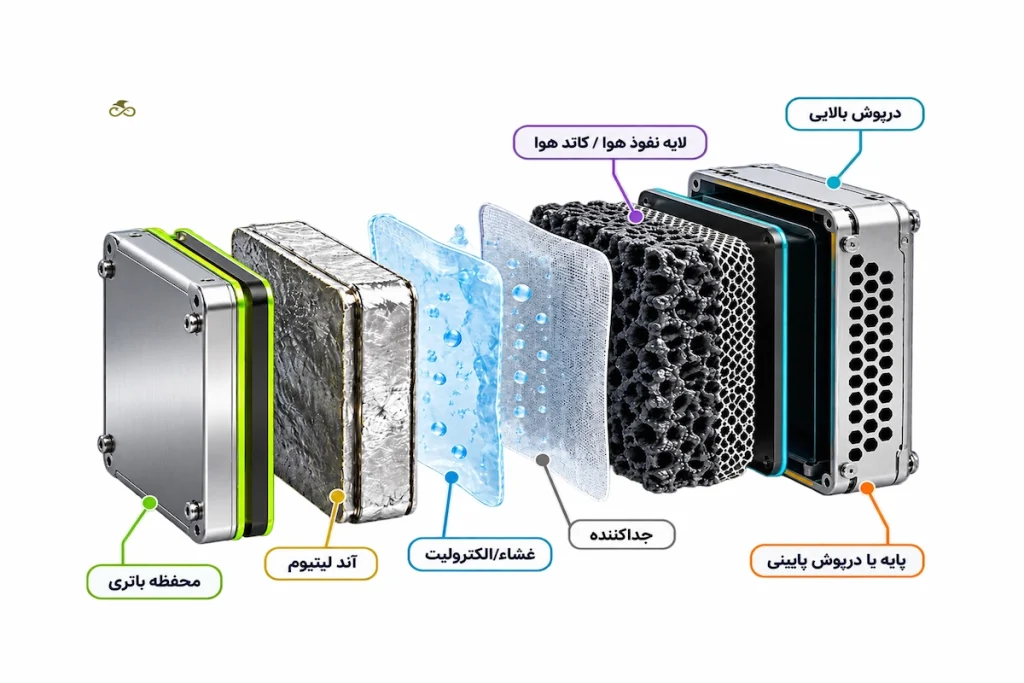


Recent research by the Pacific Northwest National Laboratory shows that the technology for longer-lasting batteries that will one day be found in gadgets is being developed, but what is causing the capacity of lithium batteries to decrease? Stay tuned with Zoomit.
A team of scientists in a lab have used a powerful microscope to watch lithium-ion batteries charge and discharge in real time. What they found was that the stress the battery experiences during use causes the electrons in the battery to become distorted. This is just one of several factors that can cause lithium-ion batteries to lose capacity over time.
As recent research has shown, each charge and discharge cycle of a battery leaves a small amount of lithium outside its cell. This is called dead lithium, which is not available for use in the next charge cycle and causes the battery capacity to decrease. In addition, scientists have also observed how a layer of solid electrolyte covers the surface of the electrode; this layer is also one of the things that causes the battery to clog and hinder the battery’s ability to store charge.
Final word
Using alternatives to lithium could be one solution. One day, metals like magnesium, aluminum, or copper, which are both cheaper and more reliable, could serve as alternatives to lithium. However, more research is needed to improve battery performance. Gary